CEO
How to Use WhatsApp for Patient Communication: The Ultimate Guide to Automated Appointment Reminders

Running a modern medical practice is no longer just about providing world-class healthcare; it’s about logistics, communication, and patient experience.
If you are a clinic owner or a healthcare administrator, you are likely familiar with the "silent killer" of medical revenue: Patient No-Shows. In the U.S. healthcare system alone, missed appointments cost the industry an estimated $150 billion annually.
The traditional phone call is failing. Patients are busy, they don’t answer unknown numbers, and your front desk is likely overwhelmed. To scale your practice, you need a channel that is immediate, non-intrusive, and highly effective.
In this guide, we will explore why WhatsApp for medical clinics is the gold standard for patient communication and how implementing automated appointment reminders can transform your practice’s bottom line.
1. Why WhatsApp is Outperforming SMS and Email in Healthcare
For years, SMS (texting) was the standard for automated alerts. However, as patient expectations evolve, WhatsApp has emerged as the superior channel for several reasons:
-
Trust and Branding: Unlike anonymous SMS shortcodes, a WhatsApp Business profile allows you to display your clinic’s logo, address, and "Verified" badge, building instant trust.
-
Engagement Rates: WhatsApp boasts a 98% open rate, with 90% of messages being read within 3 minutes. Compare that to the 20% average open rate for emails in healthcare.
-
Rich Media: You can send more than just text. From PDF lab results to location pins for your clinic and video prep-instructions for surgery, WhatsApp provides a richer patient experience.
2. Leveraging Healthcare Automation: The Power of WhatsApp Chatbots
In a high-growth medical environment, your staff cannot manually text every patient. This is where healthcare automation through AI-driven chatbots becomes your most valuable asset.
The Benefits of a Medical Chatbot:
-
24/7 Triage & Booking: Patients often look for care outside of office hours. A chatbot can handle initial inquiries, check availability, and pre-book appointments at 2 AM.
-
Instant FAQs: "Where are you located?" "Do you take my insurance?" "What are your COVID protocols?" A chatbot answers these instantly, freeing up your receptionists to handle complex patient needs.
-
Scalability: A chatbot can handle 1,000 conversations simultaneously with the same level of care and precision, ensuring no patient is left waiting.
3. Solving the No-Show Problem with Automated Appointment Reminders
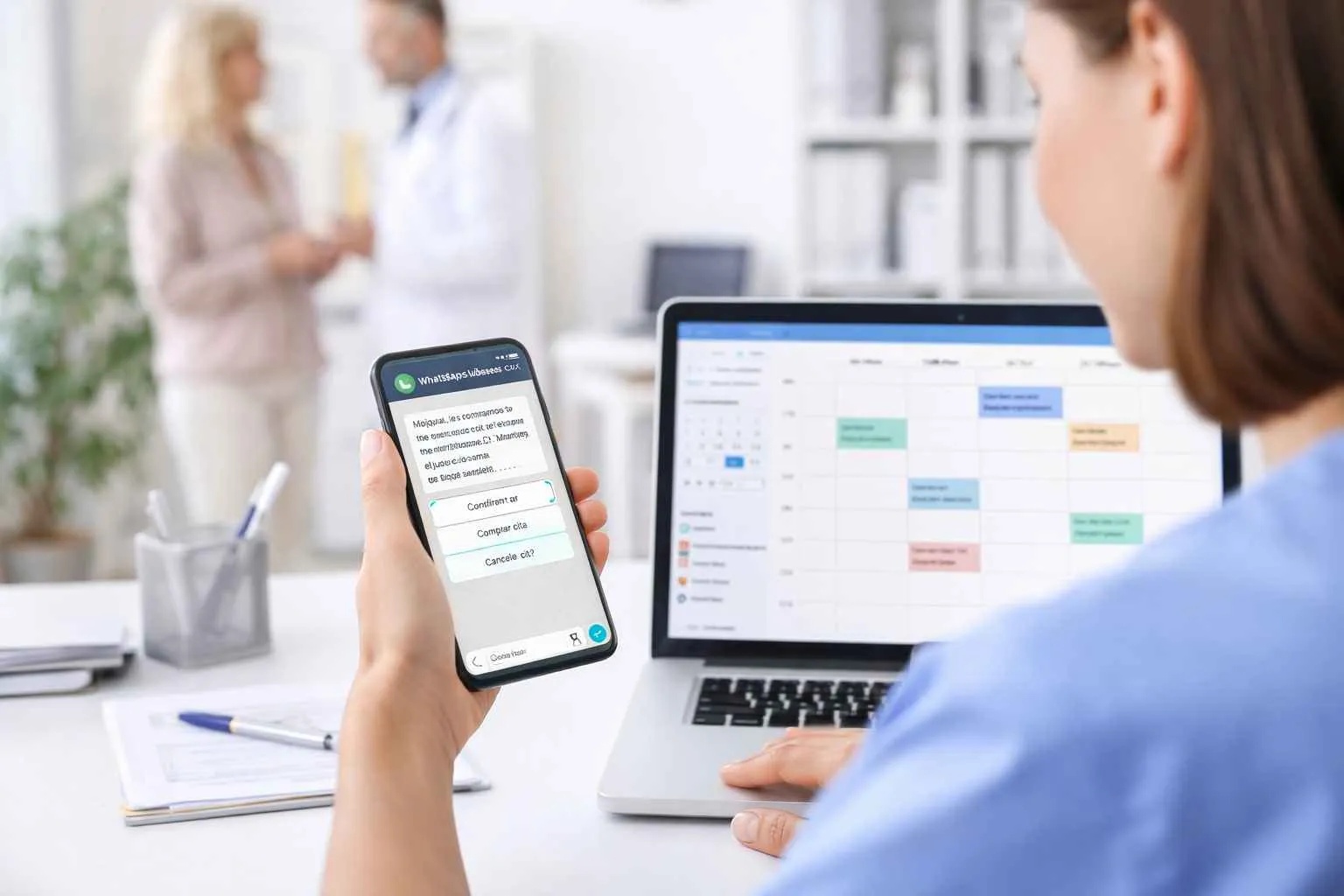
The core value of implementing automated appointment reminders via a WhatsApp system for clinics is the drastic reduction in missed appointments. A well-structured reminder sequence usually follows this high-conversion flow:
-
Immediate Booking Confirmation: The moment a patient schedules, they receive a professional confirmation message with details about their appointment.
-
The 24-Hour Reminder: A triggered message asking for a simple "Confirm" or "Reschedule" response.
-
The "Pre-Op" or Instruction Alert: Sending specific instructions (e.g., "fasting required") 4 hours before the visit ensures the patient is prepared, preventing last-minute cancellations.
The Data: Clinics switching to automated WhatsApp reminders report a 35% to 50% decrease in no-shows, directly translating into thousands of dollars in recovered monthly revenue.
4. How Happoin Powers Your Practice’s Growth
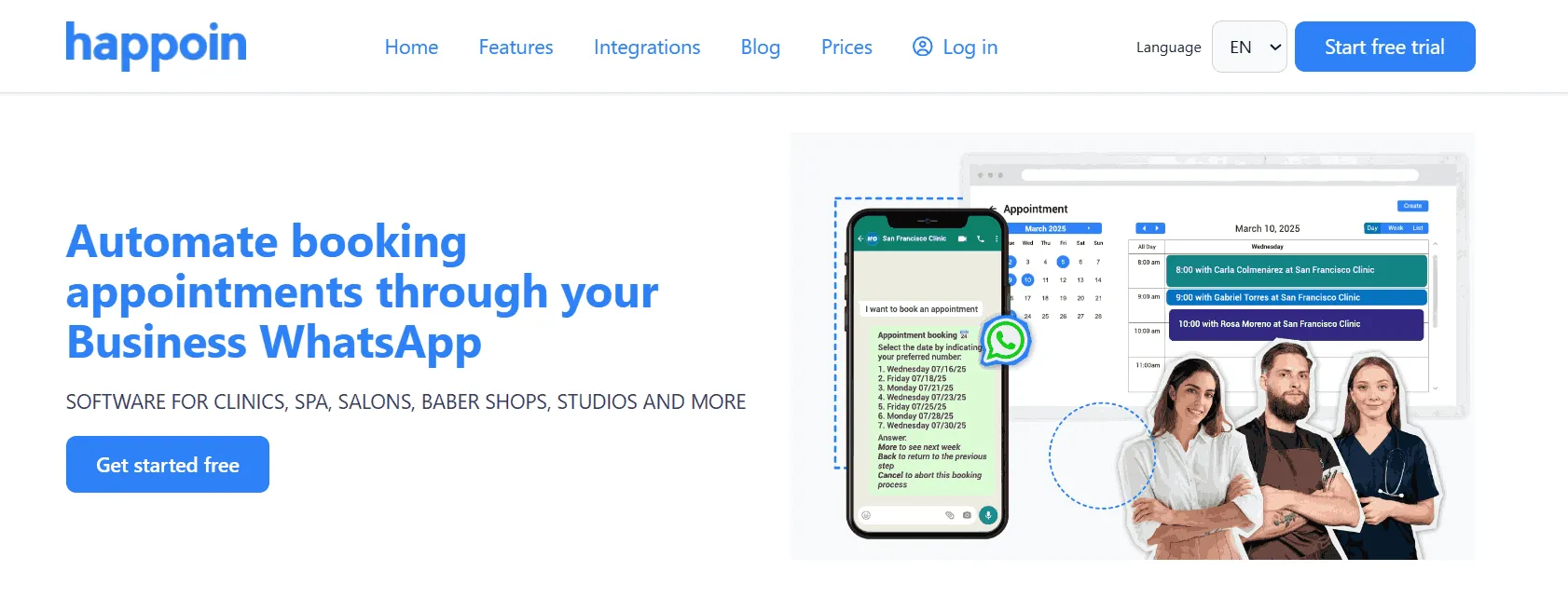
Happoin is a comprehensive appointment reminder software designed to automate your clinic's workflow through WhatsApp. Here is exactly how it transforms your patient communication and helps you reduce patient no-shows:
-
Automated WhatsApp Appointment Reminders: Say goodbye to manual texting. Happoin ensures every patient receives their reminder at the perfect time. You can fully customize the message scripts and schedule notifications to fit your clinic’s specific needs.
-
AI-Powered Chatbots: Provide 24/7 support with HappiBot 2.0. This AI-driven assistant handles FAQs, business hours, and specialty services, and can even book appointments directly—allowing your team to focus on patient care without lifting a finger.
-
Metrics & Audits: How long does it take your team to respond? How many appointments are confirmed each week? Happoin provides real-time data so you can make informed decisions based on hard numbers, not intuition.
-
Customizable Electronic Health Records (EHR): Manage your patients' medical history directly within Happoin. Our customizable formats adapt to the specific needs of each specialist, reducing paperwork costs and saving physical space in your clinic.
Conclusion: The Future of Medicine is Conversational
Patients today want the same convenience in healthcare that they get from Amazon or Uber. They want to message, not call. By adopting WhatsApp for medical clinics, you are not just "texting"—you are building a frictionless gateway to your services and improving patient satisfaction .
Are you ready to eliminate empty chairs in your waiting room and boost your practice’s efficiency?
Star a Free Trial with Happoin Today and see how our automated appointment reminders can recover your lost revenue.
Frequently Asked Questions (FAQ)
To help you finalize your strategy, we’ve gathered the most common questions from medical directors and clinic administrators regarding WhatsApp integration.
1. How much can a clinic save by automating appointment reminders?
On average, medical practices lose between 15% and 30% of their revenue due to no-shows. By implementing automated WhatsApp reminders, clinics typically see a 35% to 50% reduction in missed appointments. For a practice with $50,000 in monthly revenue, this can mean recovering $5,000 to $10,000 per month in otherwise lost income.
2. What is the difference between SMS and WhatsApp for patient reminders?
While SMS is effective, WhatsApp offers a much richer experience. WhatsApp allows for branding (clinic logo and verified profile), delivery receipts (so you know the patient read the message), and asynchronous chat where patients can ask follow-up questions without being charged per text message. Additionally, WhatsApp's open rate is significantly higher than both SMS and email.
3. Do I need coding skills to set up a WhatsApp Chatbot for my clinic?
No. Modern patient engagement platforms like Happoin are designed for non-technical users. You can easily set up automated workflows, such as welcome messages, location sharing, or basic triage questions, using a simple visual interface.